
BLOG


| Subscribe to our e-mail can be Downloads Free buyer's guide! |
2025-12-17 16:15:31 hits:647
What special pellets can flat die pellet mills produce? (biomass fuel, Such as feed, fertilizer, )
I. Flat Die Pellet Mill: How does a small machine achieve "multi-purpose" functionality?
The flat die pellet mill, with its unique horizontal die design and flexible pressure adjustment mechanism, can adapt to the molding needs of different materials by changing dies and adjusting process parameters. Its core advantages are:
• Strong die adaptability: By changing flat dies with different apertures and compression ratios, the shape and density of the pellets can be controlled;
• High raw material compatibility: Relying on gravity feeding and vertical extrusion principles, it is especially suitable for materials with low specific gravity and high fiber content (such as wood chips and straw);
• Dry molding process: No need to add excessive water or binders; granulation can be done directly with raw materials within the normal moisture content range.
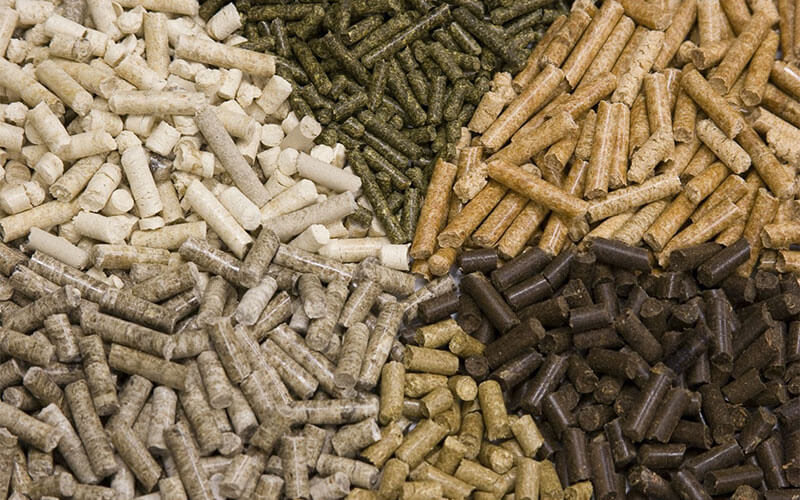
II. Detailed Explanation of Three Special Pellet Production Applications
1. Biomass Fuel Pellets: Turning waste into valuable green energy
• Applicable materials: Wood chips, rice husks, palm shells, straw, and other agricultural and forestry wastes.
• Technical points:
o The design of rotating rollers and a stationary die effectively avoids uneven feeding caused by the fluffiness of lightweight materials;
o High compression ratio dies can enhance extrusion density.
2. Feed Pellets: Balancing nutrition and palatability
• Applicable materials: Corn, soybean meal, bran, grass powder, etc.
• Technical points:
o Low-temperature extrusion molding is used to preserve nutrients while gelatinizing starch, improving digestibility and absorption;
o The pellets have a smooth surface and moderate hardness, reducing selective feeding by animals, and allowing for the integration of nutrition and disease prevention through the addition of medication.
3. Organic Fertilizer Pellets: Resource utilization of agricultural waste
• Applicable materials: Livestock and poultry manure, sludge, humus soil, etc.
• Technical points: The dry-in, dry-out process directly processes raw materials with a moisture content of 13%-20%, eliminating the need for additional drying; the screw pressure adjustment mechanism can flexibly adjust the die gap to adapt to organic waste with low adhesion. • Environmental Value: Transforming waste materials into cylindrical organic fertilizer pellets reduces environmental pollution while improving the marketability of the fertilizer.
III. Limitations and Countermeasures of Flat Die Pellet Mills
Despite the wide applicability of flat die pellet mills, their limitations should still be noted:
1. Relatively low output: Suitable for small and medium-scale production; large-scale projects require multiple units in parallel or the use of ring die models;
2. Wear management: Fibrous materials can easily accelerate the wear of molds and rollers. It is recommended to use alloy steel molds and 65 manganese rollers to extend their lifespan;
3. Raw material pretreatment requirements: Materials need to be crushed to below 5-10mm, and moisture fluctuations need to be controlled within ±2%.
Conclusion: Flat Die Pellet Mill – The Ideal Choice for Small and Medium-Scale Diversified Production
With its flexible adaptability, low investment cost, and wide range of raw material compatibility, the flat die pellet mill is the preferred equipment for the production of special pellets such as feed, biomass fuel, and organic fertilizer. For users pursuing resource recycling and diversified production, optimizing mold selection and process parameters can maximize its "multi-functional" value.
NEXT POST
No Data


 Copyright © 2004-2018 Yufchina All rights reserved.


